In today's competitive landscape, attracting and retaining top talent requires more than attractive salaries and standard benefits. True employee engagement, the emotional commitment an employee has to an organization and its goals, is the bedrock of a thriving, productive, and innovative workplace. A disengaged team often leads to higher turnover, decreased productivity, and a diluted company culture, impacting everything from customer service to the bottom line. This is where strategic, well-executed events come into play.
These gatherings are not just 'fun days' away from the desk; they are crucial investments in your company's most valuable asset: its people. Thoughtful events reinforce company values, build stronger interpersonal connections, and provide a necessary break from routine, ultimately boosting morale and loyalty. Neglecting these opportunities means missing a chance to build a resilient and motivated workforce.
This comprehensive guide delivers a detailed roundup of impactful employee engagement event ideas, designed for various budgets and formats, including in-person, virtual, and hybrid models. We will move beyond generic suggestions to provide you with a blueprint for success. For each idea, you will find:
- Actionable steps for easy implementation.
- Clear objectives and desired outcomes.
- Checklists for necessary materials and resources.
- Effective methods for measuring event success.
- Creative ways to incorporate branded items, like custom foam fingers, to amplify team spirit and create lasting, shareable memories.
Get ready to transform your workplace from a collection of individuals into a unified, motivated, and highly engaged team.
1. Team Building Retreats
A team building retreat is a powerful, multi-day offsite event designed to completely remove employees from their day-to-day work environment. The primary goal is to foster deeper connections, enhance collaboration, and align teams on strategic objectives through a combination of focused work sessions, skill-building workshops, and recreational activities. This immersive experience creates a unique space for both professional development and personal bonding, making it one of the most impactful employee engagement event ideas for significant cultural shifts or project kickoffs.
Companies like Google and Salesforce famously use retreats to spark innovation and reinforce company culture. For example, a tech company might host a two-day retreat at a mountain lodge focused on a new product launch, combining brainstorming sessions with team-based challenges like a ropes course or a collaborative cooking class.
How to Implement This Idea
- Define Clear Objectives: Start by identifying what you want to achieve. Is it to improve cross-departmental communication, brainstorm a new annual strategy, or simply reward a team for a successful year? Your goals will dictate the agenda.
- Survey Your Team: Before planning, send out a survey to gauge interest in potential activities and destinations. This ensures the retreat appeals to a wide range of personalities and preferences, increasing buy-in.
- Balance Structure and Free Time: A successful retreat agenda mixes mandatory workshops and strategic sessions with optional leisure activities. This balance respects individual needs for social engagement and personal downtime.
- Integrate Hybrid Options: For remote or distributed teams, include virtual participation options. This could involve live-streaming key sessions or creating specific online activities that parallel the in-person experience.
Pro-Tip: Boost team spirit by providing custom branded gear for the retreat. Items like personalized water bottles, hats, or even custom foam fingers for a friendly competition can create a sense of unity and provide lasting, fun mementos.
A well-executed retreat can realign team dynamics, break down communication silos, and generate a renewed sense of purpose and motivation that carries back to the office.
2. Volunteer and Community Service Programs
A volunteer or community service program is a structured initiative where employees dedicate company-supported time to charitable work. The core purpose is to connect employees to a greater sense of purpose by aligning their personal values with the company's social responsibility goals. These programs offer meaningful, collaborative experiences outside the office, strengthening team bonds while making a tangible, positive impact on the community. This approach is one of the most powerful employee engagement event ideas for fostering a purpose-driven workplace culture.
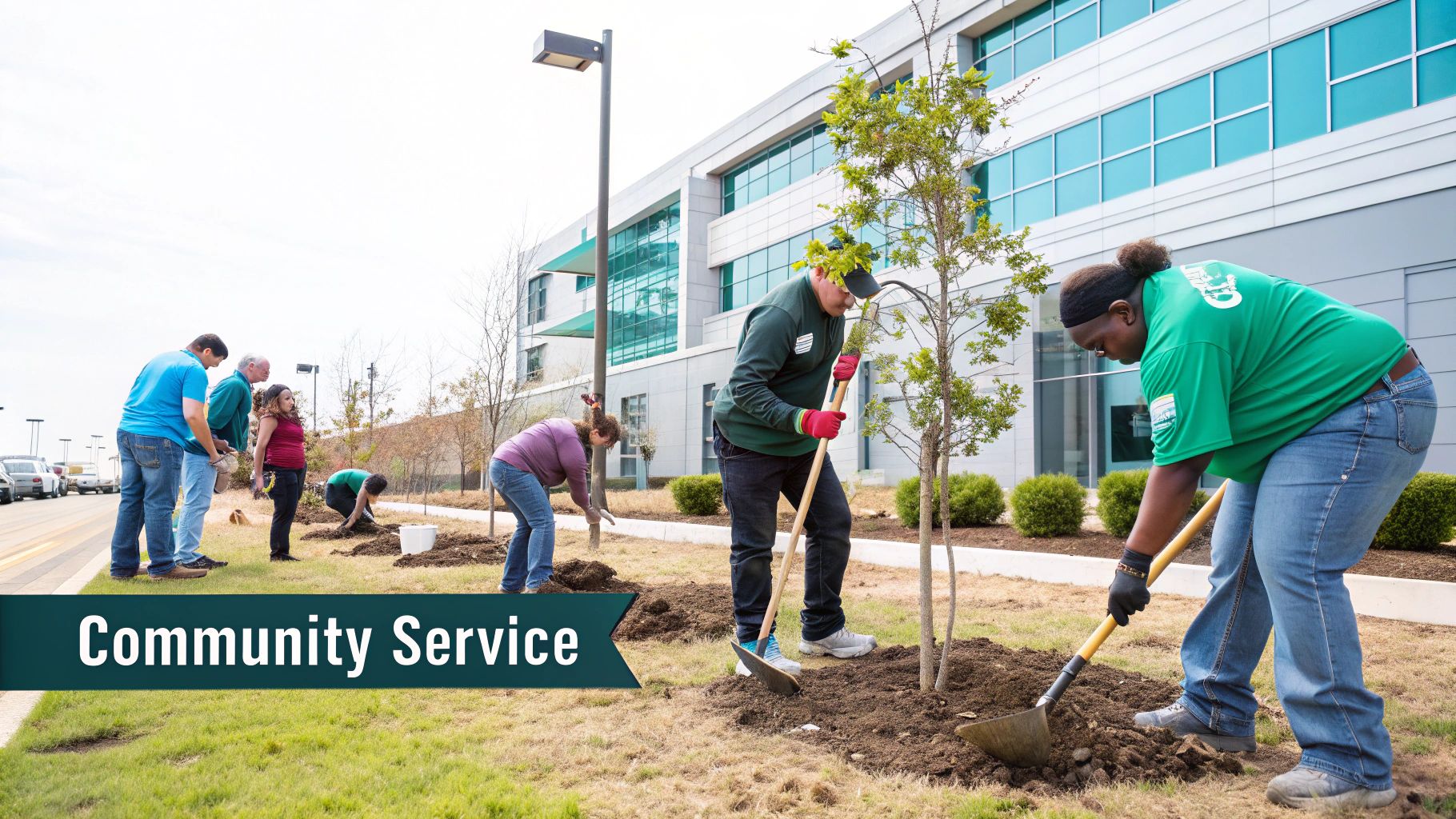
Many leading companies integrate this into their culture. Salesforce champions its 1-1-1 model, dedicating 1% of its equity, product, and employee time to communities. Similarly, Patagonia encourages environmental activism by providing paid time off for volunteering. A company could organize a day at a local food bank, participate in an environmental cleanup, or offer skills-based volunteering where marketing professionals help a nonprofit with a campaign.
How to Implement This Idea
- Align with Company Values: Partner with charitable organizations that reflect your company's mission and values. If you're a tech company, consider mentoring students in STEM fields; if you're in construction, building a local playground makes perfect sense.
- Offer Paid Volunteer Time: Dedicate a specific number of paid hours or days per year for volunteering. This removes financial barriers and demonstrates a genuine commitment from leadership, encouraging higher participation.
- Provide Diverse Options: Cater to different interests and physical abilities by offering a variety of volunteer opportunities. Include options ranging from hands-on environmental work to skill-based virtual support for a non-profit.
- Empower an Employee Committee: Allow a volunteer committee to select partner organizations and plan events. This employee-led approach increases ownership and ensures the initiatives resonate with the team.
Pro-Tip: Celebrate your team's impact and build excitement for future events with branded gear. Giving out items like matching team t-shirts or even custom foam fingers for a charity sports tournament can unify the group and serve as a proud reminder of their collective contribution.
By facilitating community involvement, you not only boost morale and teamwork but also enhance your company's public image and attract talent that values corporate social responsibility.
3. Wellness and Fitness Challenges
Wellness and fitness challenges are structured programs designed to encourage employees to adopt healthier habits through friendly competition and shared goals. The primary objective is to improve both physical and mental well-being, which in turn boosts morale, reduces stress, and increases productivity. By gamifying health through activity tracking, workshops, and incentive-based goals, these challenges foster team camaraderie in a positive and supportive environment, making them a fantastic and ongoing employee engagement event idea.
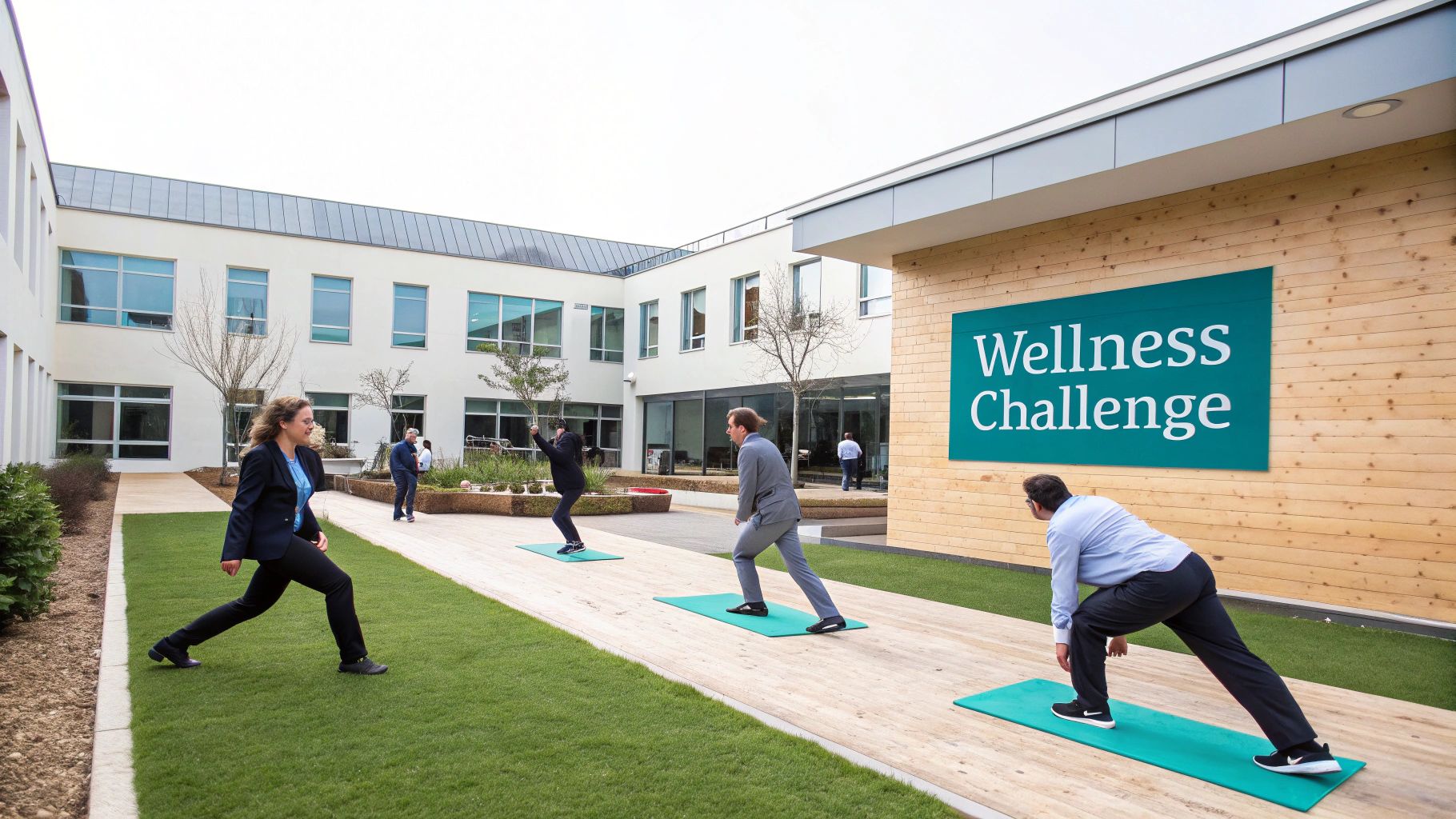
Many leading companies integrate these programs to build a healthier workplace culture. For instance, a company might launch a "Step into Spring" challenge using a platform like Virgin Pulse or Fitbit, where departments compete to achieve the highest average daily step count over a month. The winning team receives an extra day of PTO, while individual milestones are rewarded with gift cards for wellness products. This approach promotes physical activity and strengthens inter-departmental relationships.
How to Implement This Idea
- Make It Inclusive: Design challenges that accommodate all fitness levels and abilities. Include a variety of trackable activities like walking, yoga, meditation, and stretching to ensure everyone can participate meaningfully.
- Focus on Participation: Emphasize involvement over elite performance. Reward consistency, personal improvement, and team spirit to avoid discouraging employees who are just starting their wellness journey.
- Combine Physical and Mental Health: Integrate components that support mental well-being, such as mindfulness sessions, stress management workshops, or guided meditation breaks alongside physical activities.
- Offer Meaningful Incentives: Use a mix of individual and team-based rewards to motivate employees. Consider incentives like health-related subscriptions, extra vacation time, or a donation to a charity of the winning team's choice.
Pro-Tip: Celebrate milestones and the challenge kickoff with a wellness fair. Hand out branded swag like yoga mats, water bottles, or even custom foam fingers with a "Go Team Wellness!" message to generate excitement and a visible sense of unity.
By championing employee health, these challenges demonstrate a company's commitment to its people's well-being, leading to higher engagement, reduced absenteeism, and a more energized workforce.
4. Professional Development Workshops and Learning Events
Professional development workshops are structured educational events focused on enhancing employee skills and knowledge. The core objective is to invest in your team's career growth, helping them acquire new competencies, stay current with industry trends, and see a clear path for advancement within the company. By providing these learning opportunities, you demonstrate a commitment to individual development, which is a powerful driver of long-term employee engagement and retention.
Companies known for strong internal culture, like Google and Amazon, prioritize continuous learning. For instance, Amazon's Career Choice program pre-pays tuition for employees to learn in-demand skills for high-demand fields. Similarly, a marketing agency might host a quarterly workshop led by an industry expert on the latest digital advertising platforms, directly equipping their team with relevant, immediately applicable skills.
How to Implement This Idea
- Align Training with Goals: Ensure all development opportunities connect to both company objectives and individual career aspirations. Survey employees to understand what skills they want to learn and how those align with future business needs.
- Offer Diverse Learning Formats: Cater to different learning styles by providing a mix of options. This can include expert-led virtual workshops, peer-to-peer "lunch and learn" sessions, subscriptions to online platforms like Coursera, and opportunities to attend major industry conferences.
- Encourage Peer-Led Knowledge Sharing: Empower internal experts to lead sessions on their areas of expertise. This not only recognizes and validates their skills but also fosters a culture of collaborative learning and internal mentorship.
- Track and Celebrate Progress: Implement a system to track workshop completion and certifications. Acknowledge these achievements publicly in team meetings or internal newsletters to reinforce the value of continuous learning.
Pro-Tip: Make learning events more memorable by providing branded materials. A custom notebook and pen for a workshop or a custom foam finger to celebrate someone earning a new certification can add a fun, tangible element to their professional growth journey.
Investing in your employees' skills is a direct investment in your company's future, making professional development one of the most strategic employee engagement event ideas for building a competent and motivated workforce.
5. Recognition and Awards Programs
A recognition and awards program is a structured system designed to publicly or privately acknowledge and celebrate employee achievements, milestones, and contributions. More than just an annual ceremony, this employee engagement event idea involves creating an ongoing culture of appreciation through peer-to-peer platforms, spot bonuses, and consistent public acknowledgment. The core objective is to reinforce desired behaviors, motivate high performance, and make employees feel genuinely valued for their hard work.
Platforms like Bonusly and Achievers have revolutionized this by enabling real-time, peer-to-peer recognition tied to company values. For instance, a software engineer can instantly give a small bonus to a colleague in marketing for exceptional collaboration on a product launch, with the recognition visible across the company. Similarly, Zappos famously uses its recognition programs to reinforce its unique customer-centric culture.
How to Implement This Idea
- Define Recognition Criteria: Clearly outline what actions, behaviors, and outcomes are worthy of recognition. Tie these criteria directly to your company's core values and strategic goals to ensure you are rewarding what matters most.
- Enable Peer-to-Peer Recognition: Don't limit recognition to a top-down model. Implement a system where employees can celebrate each other’s wins. This fosters a stronger sense of team and empowers everyone to appreciate good work.
- Offer Diverse Rewards: Acknowledge that motivation varies. Combine monetary rewards like bonuses with non-monetary options such as extra paid time off, professional development opportunities, or a premium parking spot.
- Make it Timely and Specific: Recognition is most impactful when delivered promptly and with context. Instead of a generic "good job," a manager should say, "Thank you for staying late to fix that critical bug; your dedication saved the client presentation."
Pro-Tip: Turn an awards ceremony into a high-energy celebration. Presenting winners with custom branded items, like custom foam fingers with their name or team on them, adds a fun, memorable element that makes the recognition feel more personal and festive.
A well-designed recognition program validates an employee's effort, boosts morale, and creates a positive feedback loop that drives sustained engagement and loyalty.
6. Social Events and Team Celebrations
Social events and team celebrations are casual, recurring gatherings designed to build authentic relationships and recognize company milestones, holidays, and employee life events. The core objective is to create low-pressure, informal spaces where employees can connect as people beyond their professional roles. These events, ranging from happy hours and themed lunches to major holiday parties, are fundamental employee engagement event ideas for nurturing a positive and connected workplace culture.
Companies like Slack and GitHub excel at this by integrating celebrations into their very fabric, from virtual emoji-filled shout-outs for wins to community-focused gatherings. For instance, a marketing agency could host a monthly "Milestone Mixer" celebrating new client wins, project completions, and team birthdays, fostering a continuous sense of shared success and appreciation.

How to Implement This Idea
- Offer Diverse Event Types: Cater to different personalities and preferences by varying the activities. Alternate between after-hours happy hours, catered team lunches, morning coffee socials, and active outings like bowling.
- Embrace Inclusivity: Ensure every event is welcoming to all. This means providing ample non-alcoholic options, considering dietary restrictions, and recognizing a wide array of cultural holidays and celebrations beyond the mainstream.
- Involve Employees in Planning: Create a volunteer social committee or send out polls to let employees have a say in what they celebrate and how. This ownership increases participation and ensures events resonate with the team.
- Celebrate Both Professional and Personal Wins: Acknowledge work anniversaries and project successes with the same enthusiasm as personal milestones like birthdays or major life events. This shows the company values employees as whole individuals.
Pro-Tip: Make celebrations more memorable and spirited with fun, branded merchandise. Handing out custom foam fingers during an end-of-quarter celebration or company anniversary party adds a playful, visual element that encourages team spirit and creates great photo opportunities.
Regular, well-planned social events are the heartbeat of a strong company culture, turning a workplace into a community and boosting morale, retention, and a sense of belonging.
7. Internal Competitions and Hackathons
Internal competitions and hackathons are time-bound events where employees, often in cross-functional teams, compete to solve specific business problems or develop new products and ideas. These events channel creativity, collaboration, and a spirit of friendly competition into tangible outcomes. By providing a structured outlet for innovation, they can uncover hidden employee talents and generate valuable, actionable solutions that drive the business forward.
Many top tech companies leverage these events to foster innovation. Facebook's legendary hackathons have spawned features like the "Like" button and chat. Similarly, PayPal's innovation competitions have produced new product features by empowering employees to pitch and build their best ideas, directly connecting their creativity to business growth.
How to Implement This Idea
- Choose a Relevant Theme: Align the competition's focus with a current company challenge or a future strategic goal. This ensures the creative energy is directed toward high-impact areas.
- Encourage Cross-Functional Teams: Actively promote the formation of diverse teams with members from different departments. This breaks down silos and ensures ideas are viewed from multiple perspectives.
- Establish Clear Judging Criteria: Define and communicate how entries will be evaluated before the event starts. Focus on criteria like innovation, feasibility, business impact, and execution to guide participants' efforts.
- Commit to Follow-Through: The biggest motivator is seeing ideas come to life. Commit to reviewing and, where feasible, implementing the winning solutions. Document and share key learnings from all entries to show every contribution is valued.
Pro-Tip: Amplify the excitement and team identity by equipping each competing team with their own uniquely designed custom foam fingers. This adds a fun, visual element to presentations and creates a high-energy atmosphere during final judging.
Hackathons are powerful employee engagement event ideas because they empower individuals to take ownership, directly contribute to innovation, and see the real-world impact of their work.
8. Mentorship and Peer Learning Programs
A mentorship and peer learning program is a structured initiative that pairs experienced employees with more junior colleagues to foster professional and personal growth. The core objective is to build a supportive internal network that accelerates skill development, enhances career navigation, and strengthens organizational ties. By formalizing knowledge transfer and relationship-building, these programs serve as powerful, long-term employee engagement event ideas that invest directly in individual career paths.
Major corporations like Intel and GE have demonstrated the power of these programs. Intel, for example, uses mentorship to support its diversity and inclusion goals by connecting underrepresented employees with senior leaders. Similarly, GE’s renowned leadership programs heavily integrate mentoring to groom the next generation of executives, ensuring a consistent transfer of institutional knowledge and values.
How to Implement This Idea
- Create a Formal Matching Process: Use surveys and applications to match mentors and mentees based on specific career goals, skills gaps, and personality traits. This data-driven approach ensures a more productive and compatible pairing from the start.
- Provide Mentor Training: Equip your mentors with the necessary skills. Host workshops on active listening, constructive feedback, and effective coaching techniques to empower them to guide their mentees successfully.
- Establish Clear Objectives and Cadence: Define what success looks like for the program. Set clear expectations for meeting frequency (e.g., bi-weekly for the first three months, then monthly) and encourage pairs to set their own specific goals.
- Encourage Diverse Pairings: Facilitate cross-departmental and reverse mentoring (where a junior employee mentors a senior leader, often on topics like technology or social media). This breaks down silos and fosters a culture of mutual respect and continuous learning.
Pro-Tip: Kick off your mentorship program with an official launch event. Providing branded notebooks and pens for goal setting can create a professional feel. To celebrate key milestones, surprise mentor-mentee pairs with custom foam fingers at a company-wide meeting to recognize their commitment and progress.
Investing in mentorship shows employees that the company is dedicated to their long-term development, leading to higher retention, improved performance, and a more interconnected workforce.
9. Flexible Work Arrangements and Well-being Initiatives
While not a single event, implementing flexible work and well-being initiatives is a continuous strategy that fundamentally enhances employee engagement. This approach trusts employees with autonomy over their schedules and work locations, paired with robust support for their mental, physical, and financial health. The core goal is to show the company cares for its team members as whole individuals, not just workers, which fosters profound loyalty and motivation. This is one of the most impactful employee engagement event ideas because its effects are daily and long-lasting.
Companies like Microsoft and Spotify have pioneered these models, proving that flexibility can coexist with high performance. For instance, a company might introduce "core hours" from 10 a.m. to 3 p.m. for collaborative work, allowing employees to structure the rest of their day around personal needs, or offer a monthly stipend that can be used for gym memberships, therapy sessions, or financial planning services.
How to Implement This Idea
- Develop Clear Policies: Create a straightforward and transparent policy outlining expectations for hybrid work, flexible hours, and communication protocols. This prevents confusion and ensures fairness.
- Invest in Technology: Equip your team with the right collaboration tools (like Slack, Asana, or Microsoft Teams) and technology to ensure seamless communication and productivity, regardless of location.
- Train Your Managers: Provide managers with specific training on leading remote and hybrid teams, focusing on results-based evaluation rather than hours worked.
- Offer Holistic Well-being Support: Go beyond basic health insurance. Provide access to mental health apps, employee assistance programs (EAPs), fitness stipends, and financial wellness workshops.
Pro-Tip: Reinforce team unity during strategic in-person gatherings. When you do bring everyone together, make it an event with fun, branded swag. Gifting items like high-quality backpacks or custom foam fingers for a company-wide field day can make these rare moments together more memorable and spirited.
A commitment to flexibility and well-being demonstrates a deep level of trust and respect, directly translating into higher retention, reduced burnout, and a more engaged, productive workforce.
10. Employee Spotlight and Story-Sharing Programs
An employee spotlight is a continuous initiative that humanizes the workplace by highlighting individual team members' stories, achievements, and backgrounds. The primary goal is to foster a deeper sense of community and belonging by celebrating the diverse people who make up the organization. By regularly sharing these personal and professional narratives through internal newsletters, video profiles, or dedicated social media campaigns, companies can build powerful connections, amplify employee voices, and reinforce a culture of appreciation. This is one of the most effective employee engagement event ideas for building empathy and strengthening interpersonal bonds over time.
Companies like LinkedIn and Patagonia excel at this by featuring authentic employee profiles that connect individual journeys to the company's broader mission. For instance, a company could launch a monthly video series called "Meet the Makers," where each episode profiles a different employee from a different department, showcasing their role, hobbies, and what they love about their work, thereby breaking down departmental silos.
How to Implement This Idea
- Create a Nomination Process: Establish a simple, accessible system for managers and peers to nominate colleagues for a spotlight feature. This ensures a steady stream of candidates and involves the entire team in the recognition process.
- Develop a Consistent Format: Decide on a template for your stories, whether it's a Q&A article, a short video interview, or an audio podcast segment. Consistency makes the program recognizable and easier to produce regularly.
- Amplify Across Multiple Channels: Share the finished spotlights across various platforms like your company intranet, internal newsletters, Slack channels, and even public-facing social media to maximize reach and impact.
- Focus on Authentic Storytelling: Train interviewers to ask open-ended questions that go beyond professional achievements. Encourage employees to share their passions, challenges, and personal growth stories to create more relatable and impactful content.
Pro-Tip: When celebrating the launch of a new employee spotlight series or a milestone feature, hand out fun, celebratory items. Giving teams custom foam fingers to cheer on their featured colleague during a town hall announcement adds a playful, supportive touch and makes the recognition feel like a major event.
A well-executed story-sharing program transforms colleagues from mere coworkers into multidimensional people, building a more connected, empathetic, and engaged workforce.
10-Point Comparison: Employee Engagement Event Ideas
| Program | 🔄 Implementation complexity | ⚡ Resource requirements | 📊 Expected outcomes | 💡 Ideal use cases | ⭐ Key advantages |
|---|---|---|---|---|---|
| Team Building Retreats | High — multi-day logistics, venue & facilitation | High — travel, accommodation, facilitators, time off | Strong team cohesion, improved communication, strategic alignment | New teams, offsite strategy, leadership development | Deep bonding, morale boost, focused strategic work |
| Volunteer & Community Service Programs | Medium — partner coordination, scheduling | Medium — PTO, modest donations, coordination time | Increased purpose, community impact, improved employer brand | CSR initiatives, value-alignment, local community support | Builds purpose, brand goodwill, employee loyalty |
| Wellness & Fitness Challenges | Low–Medium — platform setup and program design | Low–Medium — apps, wearables, small incentives | Better health metrics, reduced absenteeism, habit formation | Ongoing well-being, large/distributed teams, preventive health | Scalable, affordable, improves physical & mental health |
| Professional Development Workshops | Medium–High — curriculum, instructors, scheduling | Medium–High — training budgets, course fees, time | Skill growth, higher performance, career progression | Upskilling, leadership pipelines, technical certification | Tangible skills, retention through growth investment |
| Recognition & Awards Programs | Low — platform/process setup and governance | Low — rewards budget, platform or tools | Increased motivation, reinforced behaviors, retention | Continuous morale boosts, performance reinforcement | High impact per cost; timely appreciation |
| Social Events & Team Celebrations | Low — simple planning and scheduling | Low — food/venue/entertainment budget | Improved relationships, culture, stress relief | Celebrating milestones, culture-building, informal bonding | Easy to run, high participation, boosts morale |
| Internal Competitions & Hackathons | Medium — theme design, judging, logistics | Medium — time allocation, prizes, technical support | Sparks innovation, prototypes, cross-team collaboration | Product innovation, rapid prototyping, talent discovery | Drives creativity, uncovers ideas & talent |
| Mentorship & Peer Learning Programs | Medium — matching, structure, oversight | Low — coordinator time, minimal budget | Accelerated development, knowledge transfer, retention | Onboarding, leadership development, succession planning | High ROI, personalized growth, leadership pipeline |
| Flexible Work & Well-being Initiatives | Medium–High — policy, manager training, systems | Medium — collaboration tools, benefits, stipends | Higher satisfaction, retention, productivity, lower burnout | Talent attraction, remote/hybrid workforces, work-life balance | Strong retention, improved well-being and flexibility |
| Employee Spotlight & Story-Sharing | Low — editorial process and scheduling | Low — content production time, modest tooling | Greater visibility, belonging, employer branding | D&I storytelling, internal culture building, recruitment | Low-cost culture lift; humanizes workplace and voices |
Putting Your Engagement Plan into Action
The extensive list of employee engagement event ideas presented in this guide is more than just a menu of options; it's a strategic toolkit designed to help you build a more connected, motivated, and vibrant workplace. We've explored everything from immersive Team Building Retreats and impactful Volunteer Programs to skill-enhancing Professional Development Workshops and celebratory Social Events. Each idea, whether a large-scale hackathon or a simple peer-to-peer recognition program, offers a unique pathway to reinforcing your company culture and demonstrating a genuine investment in your team’s well-being and growth.
The central takeaway is that true engagement is not the result of a single, isolated event. It is cultivated through a consistent, multi-faceted strategy that addresses the diverse needs and interests of your workforce. The most successful programs blend different types of activities across the calendar, creating a rich tapestry of opportunities for connection, development, and recognition.
From Ideas to Impact: Your Next Steps
Moving from inspiration to implementation requires a deliberate and thoughtful approach. The key is to build a program that feels authentic to your organization rather than simply checking a box. Here are the crucial next steps to transform these employee engagement event ideas into a powerful, sustainable reality:
-
Listen First, Plan Second: Before you book a venue or order supplies, survey your employees. Use simple tools like Google Forms or dedicated pulse survey software to ask what they truly want. Do they crave more professional development, opportunities for community impact, or low-key social gatherings? Data-driven decisions ensure your efforts will be well-received and impactful.
-
Create a Balanced Calendar: A successful engagement strategy provides a variety of touchpoints. Aim for a mix of high-impact annual events (like a retreat), quarterly initiatives (like a volunteer day or wellness challenge), and ongoing programs (like mentorship or regular recognition). This cadence ensures engagement remains a constant, not a novelty.
-
Define and Measure Success: How will you know if your efforts are working? Establish clear metrics from the start. Track participation rates, gather post-event feedback, and monitor key HR indicators like employee turnover and eNPS (Employee Net Promoter Score). Use this data to refine your approach and prove the ROI of your engagement initiatives.
The True Value of a Connected Team
Ultimately, mastering the art of employee engagement is about more than just planning fun events. It's about building a resilient, innovative, and high-performing organization where every individual feels seen, valued, and connected to a larger purpose. When employees are engaged, they are more productive, more likely to become brand advocates, and less likely to seek opportunities elsewhere. They become active participants in the company's success story.
Whether you're organizing a corporate field day, launching a fitness challenge, or celebrating a major team milestone, the goal remains the same: to create an environment where people are proud and excited to contribute their best work. The employee engagement event ideas in this article are your building blocks. Now it’s time to construct a program that will empower your team and elevate your entire organization.
Ready to inject some unforgettable spirit into your next corporate competition, team celebration, or volunteer day? CustomFoamFinger offers a fantastic way to boost morale and brand visibility with fully customizable, high-quality foam fingers and spirit items. Visit CustomFoamFinger to design the perfect branded gear that will have your team cheering loud and proud.