Let's be honest, most people think of promotional products as "free stuff." But when you're planning an event, that "free stuff" can be your most powerful tool. We're talking about tangible items—think foam fingers, t-shirts, or cool keychains—branded with your company's logo.
These aren't just giveaways. They're physical marketing tools that keep your brand in front of people long after the lights go down and the confetti is swept up. A simple item can create a real connection that a fleeting digital ad just can't match.
Why Smart Swag Is Your Secret Event Weapon
In a world cluttered with pop-up ads and sponsored posts, a physical item cuts right through the noise. When you hand someone a well-chosen promotional product, you create a memorable moment. It’s a real, human interaction. This is where smart swag shines—it can turn a passive attendee into someone who actually remembers and talks about your brand.
The psychology behind it is simple. Getting an unexpected gift makes people feel good. And when that gift is actually useful, fun, or high-quality, they connect those positive feelings directly with your brand. It’s less of a giveaway and more of a strategic handshake.
The Lasting Impact of Tangible Marketing
Think about it: a digital ad is seen for a few seconds and then it's gone. A physical product sticks around. A branded tote bag gets used for groceries, a good pen ends up on a desk, and an energetic foam finger gets brought out for the next big game.
Every time that item is used, your brand gets another impression. This is how you get a serious return on your investment, stretching your marketing reach far beyond the four walls of the event.
"A thoughtfully chosen promotional product does more than just display a logo; it solves a small problem or brings a moment of joy, embedding your brand into the daily life of your audience."
The numbers back this up, big time. The promotional products industry is booming, with U.S. sales expected to hit $27.8 billion in 2025. Even more impressive? A huge 90% of people remember the brand on a promotional item they receive, and 89% can still recall it two years later. That kind of staying power is a goldmine. You can read more about these promo industry sales growth findings on asicentral.com.
Turning Giveaways into Strategic Assets
To really make your promotional products work, you have to stop thinking about cost and start thinking about value. The question isn't, "What's the cheapest thing I can buy?" It should be, "What will my audience actually love and use?" That's the difference between building brand loyalty and ending up in the hotel trash can.
When you get it right, the benefits are huge:
- Better Brand Recall: A useful or unique item keeps your brand top-of-mind every single time someone sees it.
- Positive Brand Vibes: High-quality, thoughtful swag makes your company look good. It shows you care.
- More Booth Traffic: A truly cool giveaway can be the magnet that pulls a crowd to your booth, giving you the chance to start real conversations.
At the end of the day, smart swag is your secret weapon for making a genuine, lasting connection—something a digital-only campaign often struggles to do.
How to Choose Promotional Items People Actually Want
Ever seen a sad, lonely box of untouched swag at the end of an event? That’s what happens when you just hand out stuff. The real magic lies in giving people something they’ll actually want to keep.
The secret isn't just picking cool items; it's about strategy. It’s the difference between a random giveaway and a thoughtful gift that connects your brand to a real person. To get it right, you have to stop thinking about what you like and start thinking about what they will love.
This decision tree gives you a head start, showing how your main goal should point you toward the right type of swag from the get-go.
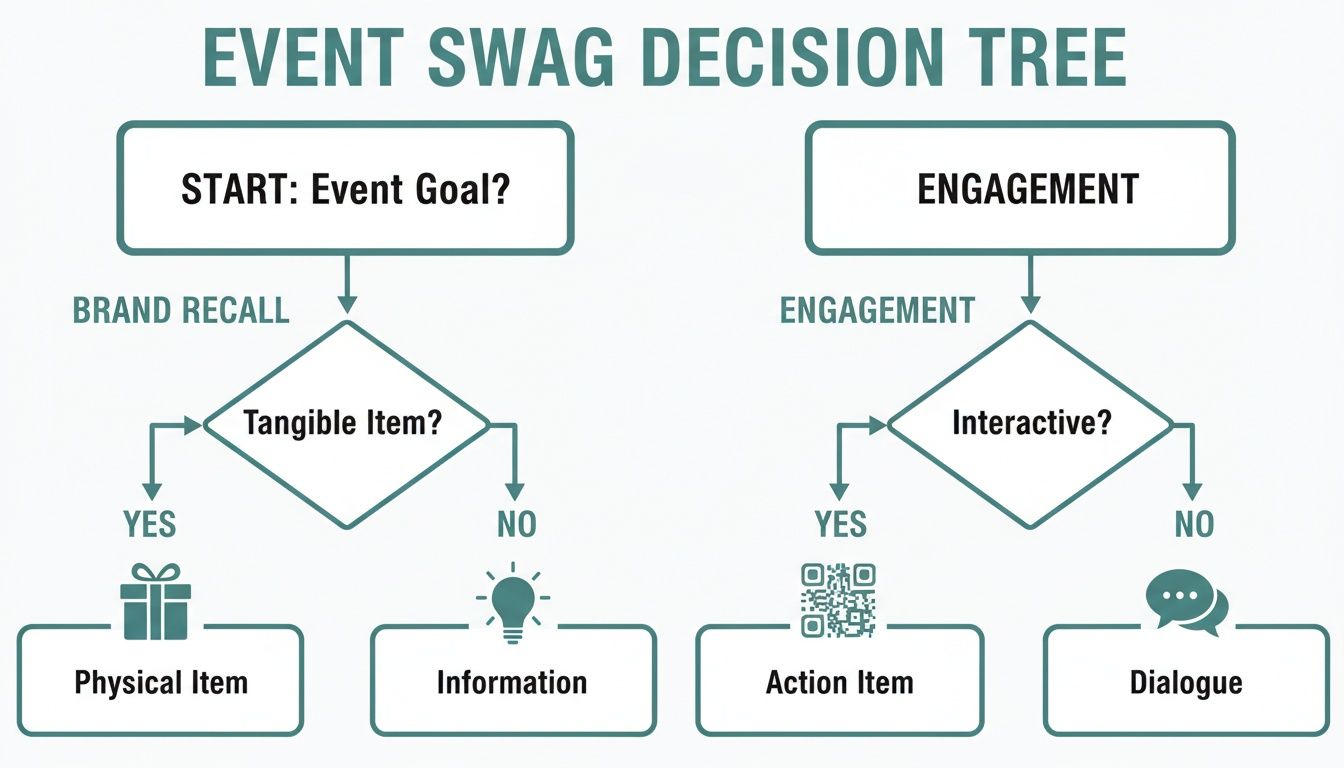
As you can see, your core objective—whether it's getting your name out there or getting people involved—steers you toward completely different product categories.
Match the Product to Your Audience
Before you even think about opening a product catalog, get a crystal-clear picture of who you're talking to. What works for a tech conference full of developers will totally miss the mark at a college football tailgate. One size fits none.
Take a minute to sketch out your ideal attendee:
- What’s their day job? Think about what tools or accessories could genuinely make their workday a little better. A sleek notebook might be a winner for corporate executives, while a durable multi-tool would be a hit with folks in the construction industry.
- What do they do for fun? Connect with their passions. An audience of outdoor lovers would get tons of use out of a branded water bottle, but a crowd of die-hard sports fans? They’d go wild for something high-energy like a custom foam finger.
- Who are they? Age and lifestyle matter. Younger crowds might gravitate toward trendy tech gadgets, while an older demographic often prefers classic, high-quality items they can depend on.
Once you know your audience, you can ditch the generic stuff and pick something that fits right into their daily lives. That’s how your swag avoids the junk drawer.
Align Swag with Your Event Goals
Your promotional products aren't just freebies—they're tools. They should be working for you to achieve a specific goal. What do you want this swag to do? The answer changes everything.
Let's break down some common event goals and the swag that gets the job done.
Here’s a simple table to help you connect your objective with the right kind of product:
| Matching Promotional Products to Event Goals | ||
|---|---|---|
| Event Goal | Product Category Examples | Key Considerations |
| Boost Brand Awareness | Wearables (T-shirts, hats), high-visibility items (foam fingers, tote bags) | Choose items that will be seen in public. The more eyes on your logo, the better. |
| Generate Leads | Higher-value tech (power banks), premium drinkware, quality office goods | The item should feel valuable enough to trade for an email address or a moment of their time. |
| Drive Fun & Engagement | Interactive items (foam fingers, thundersticks), noisemakers, light-up novelties | The swag should be part of the experience itself, adding to the energy of the moment. |
By deciding on your goal first, you ensure every dollar you spend is pushing you toward a real, measurable outcome.
Factor in Budget and Distribution Logistics
Okay, let's get practical. Your budget and how you plan to hand everything out are the final pieces of the puzzle.
Your budget isn’t just about the price per item; it’s about perceived value and quality. It's almost always better to give one high-quality, memorable item than three cheap things that will break by morning. After all, over 80% of people keep promotional products for more than a year—but only if they’re actually useful and well-made.
Think in terms of cost-per-impression. A $1 pen that gets tossed in an hour is a wasted dollar. But a $10 foam finger that a fan brings to every game for a whole season? That’s an incredible return on your investment.
Distribution is just as important. How will people get their hands on your swag?
- Welcome Bags: Go for items that are small and light. Think branded charging cables, gourmet snacks, or a nice screen cleaning cloth.
- Booth Giveaways: Use a tiered approach. Have simple items like stickers for everyone, but save the better swag—like a portable charger—for people who sit through a demo or provide solid contact info.
- Prizes or Raffles: This is your chance to create some serious buzz with a high-ticket item. Think premium headphones, a nice Bluetooth speaker, or another must-have gadget.
Choosing the right promotional products is a strategic game. But by knowing your audience, setting clear goals, and nailing the logistics, you can pick swag that people are genuinely excited to get—turning a simple giveaway into a powerful brand connection that lasts.
Exploring the Best Swag for Your Event
Picking the right promotional product is a bit like being a casting director. You wouldn't cast a dramatic actor in a slapstick comedy, right? The same goes for swag—the item has to fit the scene. Let's break down the major categories so you can choose a star performer that people will remember long after the curtains close.
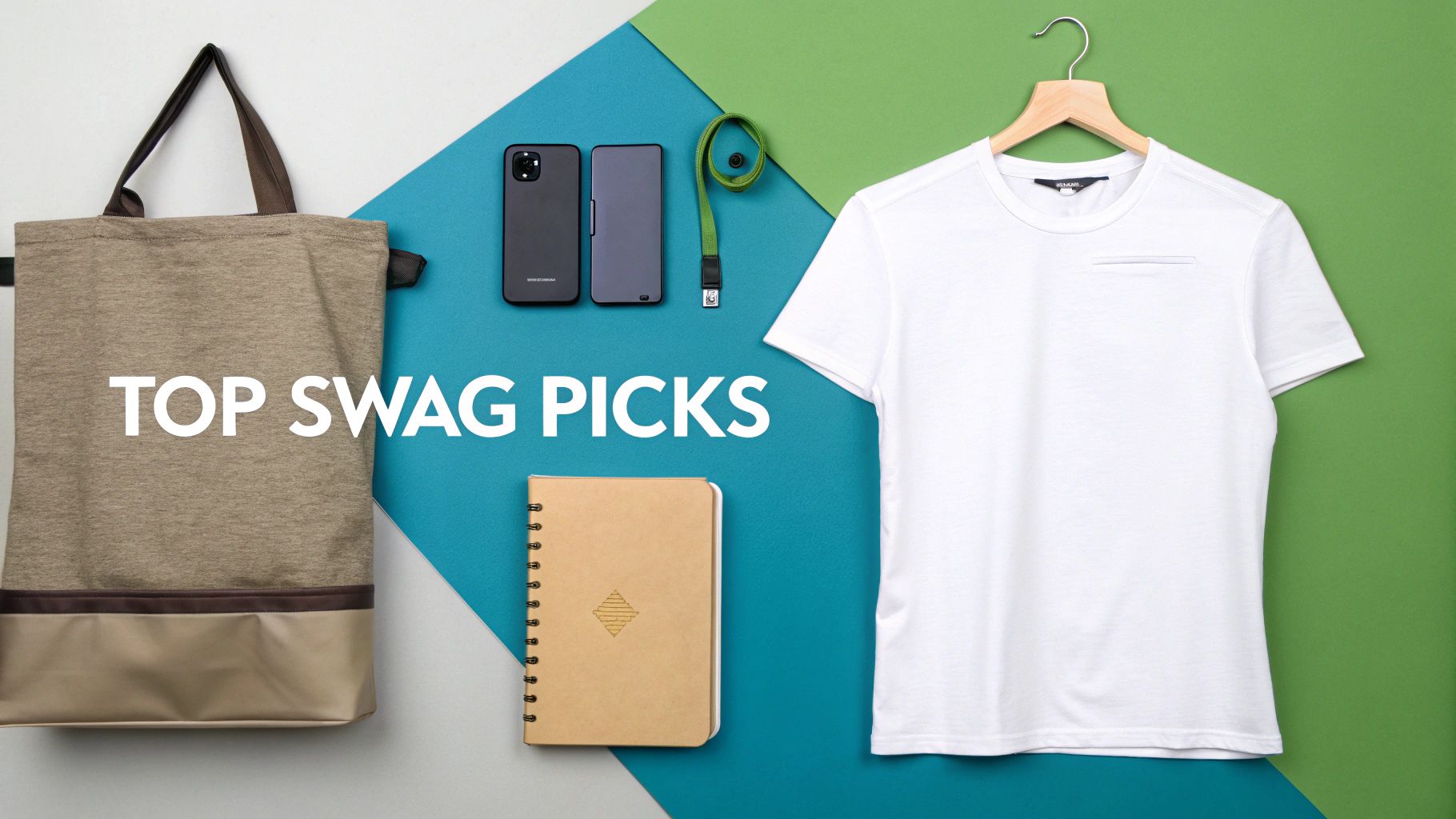
It’s about more than just giving stuff away. We need to get into the "why" behind what makes a piece of swag truly effective.
Wearables: Your Walking Billboards
T-shirts, hats, and jackets are the classics for a simple reason: they turn your attendees into brand ambassadors on the move. Every time someone puts on your gear, they’re giving your company a nod, spreading your message far beyond the event itself. This is your go-to for maximum brand exposure.
The promotional products market is huge, expected to hit $27,539.08 million by 2025, and apparel makes up a massive $5,427.95 million of that. There's a good reason for it. With 90% of consumers recalling a brand from a promotional item, turning your crowd into a walking ad is one of the smartest investments you can make. You can dig into the numbers in this promotional products market report.
- Best for: Big crowds and high-energy settings like music festivals, corporate retreats, charity runs, and major trade shows.
- Example: Imagine a tech company handing out killer, well-designed t-shirts at a huge conference. Instantly, attendees wearing them become part of a tribe, creating a sense of community on the show floor.
Tech Gadgets: The Problem Solvers
Let's be real: a dead phone at an all-day event is a disaster. That's why tech gadgets that solve this exact problem—power banks, charging cables, phone grips—are always a home run. They offer immediate, practical value, which creates an instant positive feeling about your brand.
You're not just handing over a gadget; you’re saving someone's day. That positions you as helpful, thoughtful, and in-tune with their needs.
The best tech swag feels less like a giveaway and more like a rescue kit. When your branded power bank brings their phone back to life, your brand becomes the hero.
These items are perfect for professional events where everyone is glued to their devices for networking. They get used on the spot and, because they're so useful, stick around for months or even years.
Office Essentials: The Daily Reminder
Never underestimate the power of a really good notebook or a pen that just feels right in your hand. At professional conferences, seminars, and corporate meetings, these items aren't just swag—they're tools. Attendees are there to learn, and giving them quality gear to do it with is a brilliant touch.
The keyword here is quality. A cheap, flimsy notebook gets tossed. A premium journal with a nice cover feels like a genuine gift.
- High-Quality Notebooks: Look for something with a solid cover and paper that doesn't bleed.
- Premium Pens: A metal pen that writes smoothly will become a daily driver.
- Desk Accessories: Things like mouse pads or desk organizers can find a permanent home in your attendee's office, keeping your logo front and center.
These items slide right into a professional’s daily routine, keeping your brand top-of-mind long after the event ends.
Eco-Friendly Options: Show You Care
Today, people want to support brands that share their values. Choosing sustainable and eco-friendly swag sends a clear message: your company is thoughtful and socially responsible. This is a powerful way to connect with an audience that cares about its impact.
This isn't just about the item; it's about the statement it makes.
A few popular eco-friendly ideas:
- Reusable Water Bottles or Coffee Cups: Cuts down on single-use plastic at your event and for years to come.
- Bamboo Utensil Sets: A super practical gift for the professional on the go.
- Recycled Material Tote Bags: A timeless classic, but with a green spin.
- Seed Paper or Plantable Items: A unique giveaway that perfectly symbolizes growth and new ideas.
When you choose eco-friendly swag, you’re telling a story about who you are as a brand. It’s a strategic move that builds a much deeper connection with your audience.
Getting Your Design and Order Right the First Time
You've picked the perfect promotional gear for your event, but the job's not over. Now comes the part where your idea gets turned into a real, physical thing. This is where tiny mistakes can morph into big, expensive headaches, so getting the details nailed down from the start is everything.
Think of it like building a LEGO set. If you don't have the right pieces in the right colors, your final creation won't look anything like the picture on the box. It’s the same deal here—your supplier needs the correct "pieces" (your artwork and specs) to build your product perfectly.
The Language of Design Files
The most common snag people hit is sending over the wrong kind of artwork. Nine times out of ten, your supplier is going to ask for a vector file—usually something ending in .AI, .EPS, or .SVG. This is a totally different beast from a pixel-based image like a .JPG or .PNG you might grab off your website.
Imagine your logo is a rubber band. A vector file is like a perfectly stretchy one; you can shrink it down for a pen or blow it up to the size of a billboard, and the edges will always stay perfectly crisp. A .JPG, on the other hand, is like a photo of that rubber band. Try to make it bigger, and it just gets blurry and pixelated.
Giving your supplier a vector file is like handing them the master blueprint for a flawless print, whether it's on a tiny keychain or a giant foam finger. This one step alone prevents the vast majority of printing mistakes.
Nailing Your Brand Colors
Ever print a document and notice the colors on the paper look a little… off compared to your screen? That same issue can happen with promotional products, but on a much bigger scale. To make sure your brand’s signature blue stays your blue, you need to use precise color codes.
You'll mainly run into two systems:
- Pantone (PMS): This is the universal standard for color matching. Think of it like the swatch book at a paint store; a specific Pantone number equals an exact shade of ink. This ensures your color is the exact same shade every single time, on any product.
- CMYK: This system mixes four ink colors (Cyan, Magenta, Yellow, and Black) to create all the colors in the rainbow. It's great for full-color photos but can sometimes lead to slight shifts when trying to hit a specific solid brand color.
For most event promos, giving your supplier a Pantone code is the gold standard for keeping your branding consistent and professional.
The Digital Proof: Your Last Line of Defense
Before your full order hits the presses, your supplier will send you a digital proof. This is your final mockup, showing exactly how your design will look on the product—size, placement, colors, and all. Whatever you do, don't just glance at it and click "approve."
This is your last chance to catch an error. Go over it with a fine-toothed comb. Check the spelling, logo placement, color codes, and dimensions. Better yet, have a colleague or two look it over as well. Once you approve an incorrect proof, the mistake is officially on you, so take your time and get it right.
Talking Timelines and Quantities
Finally, you need to get familiar with two key terms that will dictate your timeline and your budget.
- Lead Time: This is the total time it takes from the moment you approve your proof until the products land on your doorstep. It includes both production time and shipping. Always ask for this upfront and build in a little buffer for any unexpected shipping delays.
- Minimum Order Quantity (MOQ): Most suppliers have a minimum number of items you have to order, often 100 units or more. That’s because setting up the printing machines has a fixed cost. You can sometimes order fewer, but you'll usually pay a much higher price per item.
By getting a handle on these technical details, you can plan ahead, avoid any last-minute panic, and make sure your promo items show up on time looking exactly how you imagined.
So, you’ve picked out the perfect promotional items for your event. That’s a great start, but how you give them away is just as important as what you’re giving away. Leaving a pile of swag on a table for anyone to grab is a huge missed opportunity. To make a real impact, you need a strategy that turns a simple handout into a memorable experience.

The trick is to shift from a passive giveaway to an active interaction. When people have to do something to get their swag, its value skyrockets in their minds, and you create a genuine moment of connection.
Gamify the Giveaway Experience
Let’s be honest: people love to play games. Weaving a fun challenge into your giveaway is one of the best ways to draw a crowd and keep them there. This simple move transforms your booth from a static display into a must-see interactive stop.
Think about setting up a prize wheel where a quick spin could land on anything from stickers to your most premium items. It’s a classic for a reason—it adds a little thrill and encourages people to line up for a shot. Other simple ideas that work wonders include a quick trivia game about your industry or a classic bean bag toss. Suddenly, the prize isn't just a handout; it’s a reward for getting involved.
Create Social Media Moments
Your swag can be a powerful tool for getting your brand noticed online. Instead of just handing items over, ask for a small social media action in return. This little exchange creates a wave of user-generated content that pushes your brand’s reach far beyond the event floor.
Here’s how to put this into action:
- Photo for a Prize: Offer a high-value item, like a custom foam finger or a slick T-shirt, to anyone who posts a photo from your booth and tags your company.
- Hashtag Challenge: Create a unique event hashtag and give a prize to the most creative posts that use it throughout the day.
- Follow to Win: Ask attendees to follow your social accounts on the spot in exchange for a desirable piece of swag.
This strategy is a win-win. You trade a physical product for valuable online buzz, turning attendees into brand advocates who are happy to spread the word.
Implement a Tiered Swag System
Not every conversation at your booth holds the same weight. A tiered giveaway strategy makes sure your best and most expensive promotional products for events go to your most qualified leads. It’s a smart way to manage your budget while rewarding people for deeper engagement.
A tiered model aligns the value of the giveaway with the value of the interaction. It’s a strategic way to thank prospects for their time and attention, making them feel recognized and appreciated.
For example, anyone who swings by your booth might get a branded pen. Someone who sticks around for a full product demo could walk away with a notebook or a quality water bottle. And for the prospect who books a follow-up meeting? They get the premium stuff, like a high-end power bank or a branded jacket. This approach creates a clear path that encourages meaningful conversations and helps your team spot the hottest leads in the room.
To help visualize this, here’s a breakdown of how different tactics can drive different levels of engagement.
Creative Distribution Tactics and Their Impact
| Distribution Tactic | Best For | Potential Impact |
|---|---|---|
| Simple Grab-and-Go | High-traffic areas, general brand awareness | Low engagement, but high volume of impressions. |
| Prize Wheel or Game | Drawing a crowd, creating a fun atmosphere | High booth traffic, memorable and positive brand interaction. |
| Social Media Action | Boosting online reach, generating user content | Moderate engagement, extends brand visibility beyond the event. |
| Tiered Giveaways | Qualifying leads, rewarding valuable interactions | High-quality engagement, identifies and rewards serious prospects. |
Ultimately, a thoughtful distribution strategy ensures your investment in promotional products pays off by creating connections, not just clutter.
How to Measure Your Event Swag ROI
So, you handed out hundreds of promotional items at your last event. It felt great, right? But now comes the hard part: proving it was a smart business move. Measuring the return on investment (ROI) for your event swag isn’t some fuzzy, abstract concept. It’s about ditching the guesswork and using real data to show the value you created.
Think of your swag as a key that opens the door to a new customer. To figure out if it worked, you just need to count how many people used that key and what they did once they stepped inside. It takes a little planning, but the data you get is exactly what you need to justify your budget and make your next event even better.
Tracking the Hard Numbers
The simplest way to prove ROI is to track the numbers. This means creating a direct line from your physical swag to a digital action you can actually count. The easiest method? A QR code or a unique URL printed right on your item.
This small addition turns a simple giveaway into a powerful data-gathering tool. A QR code on a foam finger, for example, can send attendees exactly where you want them to go.
- Dedicated Landing Page: Create a webpage just for event attendees. Tracking the unique visits tells you exactly how much immediate interest you generated.
- Exclusive Offer Redemption: Link to a page with a special discount, a free download, or a contest entry. The number of people who redeem it is a direct measure of engagement.
- Social Media Hashtag: Slap a unique hashtag on your swag and encourage people to post photos. You can easily track the posts, shares, and overall social media buzz you created.
Promotional products consistently deliver strong returns, especially at events. A whopping 90% of people remember the brand from a promo product, with 89% still recalling it after two years, far surpassing other media. With distributor sales projected to hit $27.8 billion in 2025, it's clear that events are a powerful driver for turning giveaways into loyalty builders. You can find more data about the promotional products market on metastatinsight.com.
Gauging the Vibe and Buzz
Not everything that matters can be neatly tucked into a spreadsheet. The qualitative side of ROI is all about the human element—the reactions, the energy, and the conversations that your swag sparks. While you can't always assign a number to it, this feedback is just as crucial for understanding your impact.
You can gather this intel just by watching the atmosphere around your booth. Did your giveaway create a buzz? Were people genuinely excited to get one? That kind of positive energy is what leads to more meaningful conversations and stronger leads.
Here are a few things to look for:
- Increased Booth Traffic: Did a crowd start forming when you brought out the swag? A popular item acts like a magnet, pulling people in and giving your team more chances to connect.
- Attendee Reactions: Listen to what people are saying. Comments like, "This is the coolest thing I've gotten all day!" are a dead giveaway that you picked a winner.
- Post-Event Conversations: When you follow up with leads after the show, ask if they remember the item you gave them. If they do, you know you made a memorable impression.
Common Questions About Promotional Products for Events
Nailing down your event giveaway strategy always brings up a few last-minute questions. It's totally normal. Getting the practical details sorted out is the key to avoiding headaches and making sure your promotional gear is a home run. Here are a few of the most common questions we get, with straight-up answers.
How Far in Advance Should I Order Event Swag?
The short answer? Way earlier than you think.
To be safe, give yourself a 6-8 week lead time, especially if you're getting something totally custom-made. That might sound like a lot, but it gives you a comfortable buffer for the whole process, from brainstorming to delivery day.
Here’s a rough breakdown of where that time goes:
- 1-2 weeks to pick the perfect item and lock in your design.
- 1 week for getting and approving digital proofs (don't skip this!).
- 3-4 weeks for the actual production and shipping.
Building in that extra time is your best defense against rush fees, unexpected shipping delays, or supply chain hiccups. Trust me, you’ll be glad you did when your promo products show up with time to spare.
What Are the Best Items for a Limited Budget?
When you're working with a tight budget, think utility over everything. You want items where the perceived value is way higher than what you actually paid. The goal is to find something people will genuinely use, making your brand look both smart and generous.
Things like well-designed stickers, microfiber screen-cleaning cloths, or a really good pen that doesn't feel cheap are fantastic options. These are often appreciated more than a flimsy tote bag that falls apart after one use. Another pro tip: ordering in larger quantities almost always drops your per-item cost, letting you stretch that budget even further.
Should I Prioritize My Logo or a Slogan on the Product?
Your logo is the one thing that's non-negotiable. It has to be there, and it has to be clear. That's how people will remember you.
But you don't have to stop there. A short, punchy event hashtag or a clever tagline that captures the vibe of the day can be a great addition.
Here's what you want to avoid: cluttering your item with your full website URL, phone number, and every social media handle. It just looks messy. Instead, use a simple QR code that points to a dedicated landing page. It keeps the design clean and gives you a direct, trackable way to see who's engaging.
The whole point is to create something people are proud to use, not an item that screams "I'm an advertisement." A clean design with a clear logo and a simple call to action almost always wins.
Ready to create a high-impact giveaway that gets everyone talking? CustomFoamFinger makes it easy to design and order custom foam fingers that bring energy and excitement to any event. Start creating your custom foam finger today!
Article created using Outrank